


 Download PDF
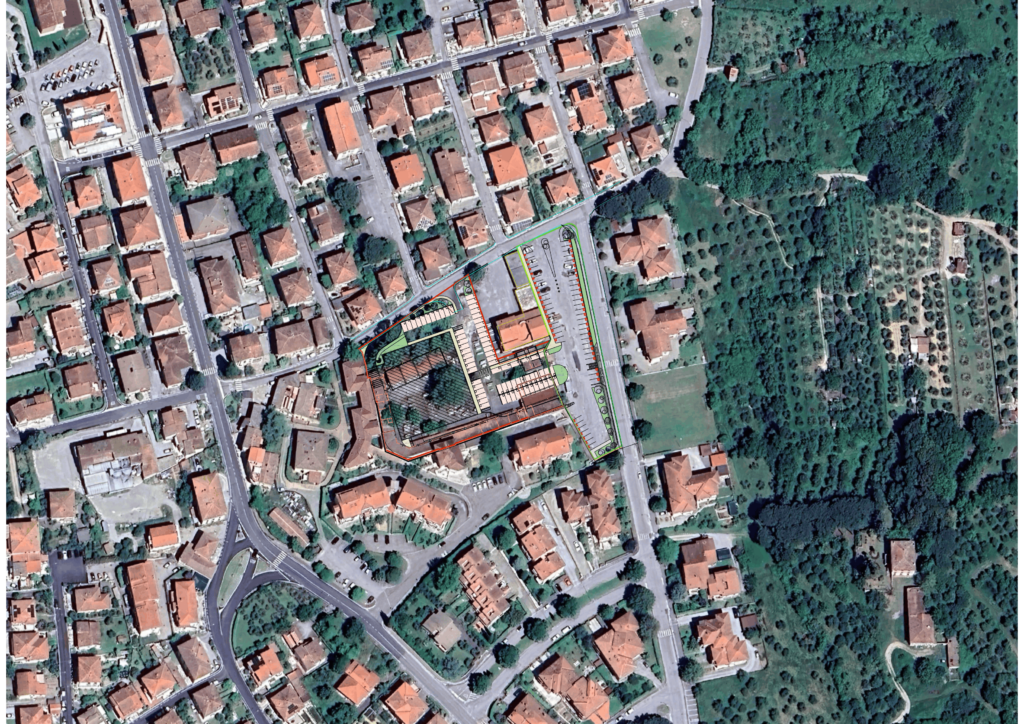
We analyzed the transport impact on the construction of a new medium-sized retail structure in Rapolano Terme. The objective of the assignment is to evaluate the transport sustainability of the AR_1_04 project in Rapolano Terme by analyzing the interaction between the new medium-sized retail structure and the existing road network. Through the use of dynamic microsimulation, the study validates the efficiency of the new access points and ensures the harmonization of induced traffic loads with current vehicle flows.
Starting from high-precision automatic video surveys, we reconstructed the current mobility demand and estimated the loads induced by the new commercial hub. Through dynamic microsimulation, we tested the capacity of intersections and new access points on Via San Sebastiano, verifying traffic fluidity during both weekdays and Saturday peaks to ensure optimal urban integration.

Activities and approach:
- Advanced Monitoring: flow acquisition via high-precision video surveys for detailed mapping of mobility in the study area.
- Demand Modeling: estimation of vehicle loads generated by the new development, adopting conservative parameters to test the maximum network capacity.
- Spatial Flow Analysis: study of vehicle distribution between new access points and parking areas, optimizing entry and exit routes.
- Dynamic Microsimulation: digital reconstruction of scenarios to analyze real-time interaction between vehicles and intersection behavior.
- Performance Evaluation: comparative analysis of fluidity using delay and queuing indicators to certify system efficiency.
- Functional Access Verification: optimization of gateways on Via San Sebastiano, ensuring correct separation between light flows and heavy logistics.
- Sustainability Validation: rigorous comparison between scenarios to ensure that commercial traffic integrates harmoniously with existing circulation.
Advanced microsimulation analyses confirmed the full efficiency of the proposed solutions, demonstrating how the road network can integrate new traffic loads without altering the balance of local viability. Thanks to detailed dynamic modeling, the project’s effectiveness in maintaining optimal outflow conditions was validated, ensuring constant flow even during peak hours. The new configuration of access points and the enhancement of parking areas optimize the interaction between different flows, precisely separating customer maneuvers from logistics. The result is a functional urban regeneration that improves the accessibility of the sector, raising safety and fluidity standards for the entire city quadrant.
